 (516) 679-2225



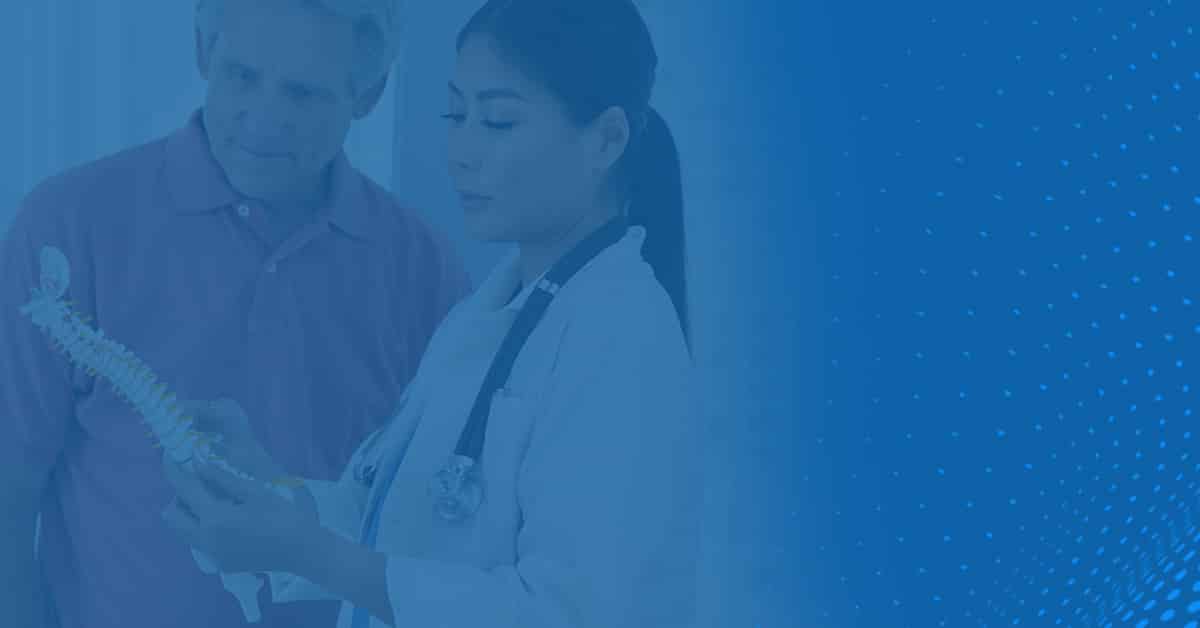
Many of us first heard of scoliosis in grade school and haven’t thought too much about it since then. For those who may not be familiar, scoliosis is a curvature of the spine that could involve either the spinal column bending into a “C” or an “S” shape from your lower back to your neck, or even going from side to side. We get tested at a young age, and those with a severe enough case of scoliosis may require assistance to help straighten the spine over time as you grow.
Unfortunately, scoliosis is not limited to kids. Many adults can develop scoliosis over time, leading to discomfort, pain, and mobility issues. So, what do we need to know about scoliosis?
What Is the Main Cause of Scoliosis?
There are two kinds of scoliosis: structural and nonstructural. With nonstructural, the curves in the spine are temporary and can potentially heal over time without much intervention. When the scoliosis is structural, that’s a permanent curvature that will remain intact until treated.
For scoliosis in children, the diagnosis can usually be given within the first seven years of a child’s life. In these cases, the common causes are typically linked to genetics, birth defects, and other genetic abnormalities.
Other causes of scoliosis later in life cannot be confirmed with 100% accuracy. That said, spinal injuries and infections certainly play a role in the overall health of your spinal column. Additionally, muscular dystrophy can cause weakness in some of the muscles around your spine. The uneven strength around the muscles providing your back support can cause a curvature to protrude from the weakened area.
Can I Live Normally with Scoliosis?
You may be able to live normally with scoliosis, but it depends on the degree of the curvature. If the curvature is less than 25 degrees, then you can probably go about your day-to-day activities with little thought about it. Once it’s more than 25 degrees, it could become more of a problem, and you should strongly consider some form of intervention. Some more extreme cases involve curvatures as high as 40 degrees or greater.
Can Scoliosis Be Corrected?
There are several ways that scoliosis can be treated and potentially corrected. This could be done through the use of a back brace, or in some more extreme cases, surgery may be recommended. For many, surgery is seen as a last resort, but chiropractic treatments can help you avoid this. Chiropractic care can treat scoliosis easing pain by reducing tension in the neuromuscular system in those with the condition.
Additionally, those suffering from scoliosis often develop fascial adhesions. The Graston Technique® can be used to treat and break up these fascial adhesions, easing the discomfort and pain they can cause.
East Bay Chiropractic Wellness Can Help Treat Scoliosis
Scoliosis and other forms of spinal distortion can lead to chronic back pain and discomfort, negatively impacting your daily quality of life. For over 35 years, East Bay Chiropractic Wellness P.C. has provided a wide range of chiropractic services to best fit your needs. We can work with you on pain management through massage, stretching exercises, spinal adjustments, and more. Schedule your appointment today and take the first step toward pain reduction and a more comfortable life.


